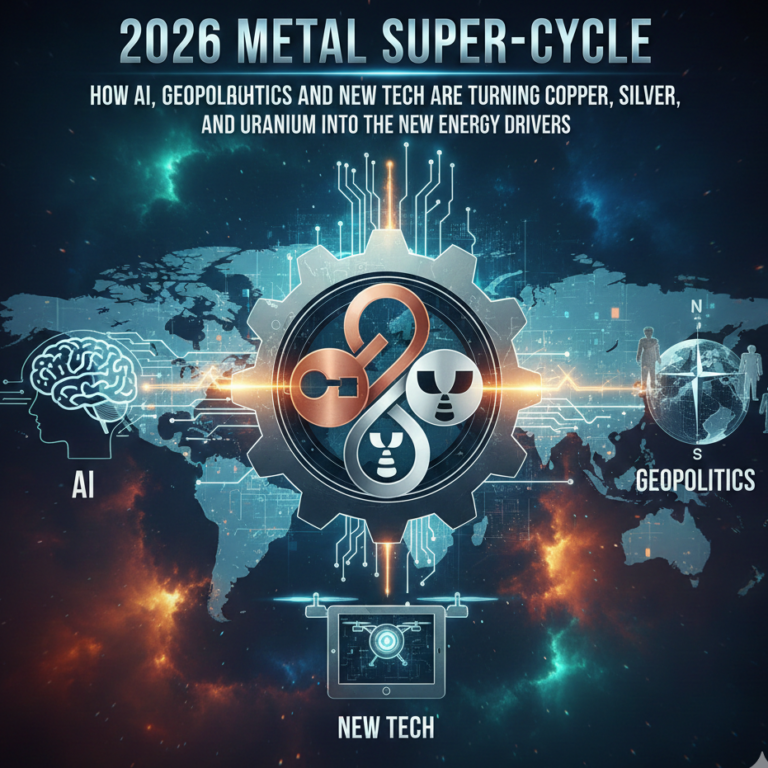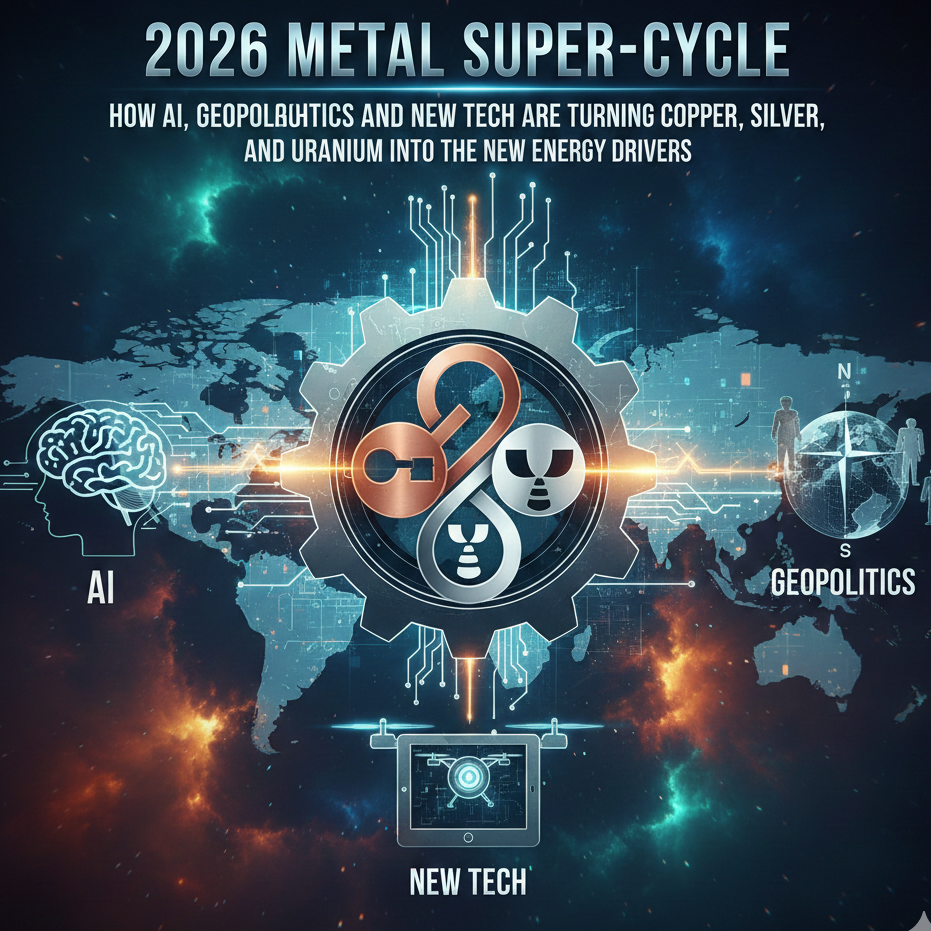
2026 Metal Super‑Cycle: Copper, Silver & Uranium Set to Drive AI & EV Markets
Explore why 2026 marks a turning point for metals. AI data centers, India’s Shanti Bill, China’s export limits and new battery tech are reshaping copper, silver and uranium demand.
2026: The Year the Metals Market Shifts
In December 2025 the world witnessed a rare “Great Divergence”: crude oil fell below $62 a barrel while gold, silver and copper surged past historic highs. The dollar hit a record $1,400. The question on everyone’s lips? “Is this a bubble?” The answer, according to experts, is no—this is a panicky shift toward a material‑intensive economy that will make metals the backbone of the next industrial revolution.
Why Metals, Not Oil, Will Power the Future
The U.S. Geological Survey’s November 2025 update added copper, silver and uranium to its Critical Minerals List. That designation signals a national‑emergency status if supply falters. The underlying reason: without these metals, the U.S. economy, its military and future technologies would grind to a halt.
Four Pillars of the 2026 Super‑Cycle
The video breaks the story into four chapters. Each chapter explains a different driver that is accelerating demand, tightening supply, or reshaping the geopolitical landscape.
1. Demand Drivers: AI, EVs and Solar
AI data centers are the new “oxygen” of the digital age. A single hyperscale AI hub can consume up to 50,000 tons of copper, five to ten times more than a traditional data center. Why?
• Higher power density: AI racks need thicker copper wiring to handle the heat.
• Liquid cooling: Copper is the only metal that can be used for the required cooling pipes because aluminum causes galvanic corrosion.
Bloomberg NEF predicts copper demand for data centers alone will reach $572,000 tones annually by 2028—price‑inelastic, meaning companies will pay whatever the market sets.
Silver’s role is expanding beyond jewelry.
• Solar panels now use 50 % more silver, raising its share of the world’s silver consumption from 11 % in 2014 to 29 % today.
• Electric vehicles (EVs) use 67–79 % more silver than internal‑combustion cars, with 25–50 g per vehicle. Oxford Economics forecasts EVs will become the top silver demand source by 2027.
2. The Physical Crisis: 29‑Year Mine Development
SNP Global’ s July 2024 report revealed the U.S. takes an average of 29 years from discovery to mine production—longer than Zambia (34 years), Canada (27 years) and Australia (20 years). This lag creates a mismatch between soaring demand and sluggish supply.
Physical inventories on exchanges are critically low. In December 2025, copper futures in Shanghai spiked to $270/ton, while New York and London hovered around $1,400/ton. The gap widened because Chinese factories preferred physical metal over paper contracts.
Silver has run a five‑year deficit, with a 2025 shortfall of 117 million ounces. Supply disruptions—like the Grasberg mine accident in Indonesia and protests shutting down the Cobre Panama mine—further strained the market.
3. Geopolitical War: Resource Nationalism
India’s Shanti Bill (2025) opened the nuclear sector to private players, targeting 100 GW of nuclear capacity by 2047. The bill’s provisions for small modular reactors and secrecy over nuclear data will boost uranium demand, already up 7 % in a month.
China’s export restrictions—starting January 2026—limit silver, gallium, germanium, graphite and antimony. As the world’s largest refiner of critical minerals, China’s move could tighten global supply, raising prices and forcing industries to seek alternatives.
4. The Tech Twist: Sodium and Aluminum
When copper and lithium become expensive and politically risky, alternatives emerge.
• Sodium‑ion batteries (the “salt revolution”) have entered grid‑scale storage. They operate at lower temperatures, cost 20 % less, and offer comparable energy density to lithium.
• Aluminum is increasingly replacing copper in air‑conditioners, refrigerators, and even electric motors, thanks to its lower cost (3.5× cheaper) and comparable performance. Advanced Electric Machines’ new motor eliminates copper and rare‑earth magnets, cutting costs by 30 %.
These shifts add pressure on copper prices but also diversify the metals ecosystem.
What Does This Mean for Investors?
• Long‑term allocation: 15–20 % of a portfolio can be metals‑focused.
• Silver: 60 % of that allocation can target silver, which has delivered ~150 % returns in the past year.
• Copper: Direct investment is limited; instead, buy copper‑related stocks or a broad metals ETF (e.g., ICICI Prudential Metals ETF).
• Gold: The remaining 40 % can stay in gold for stability.
ETFs for silver (e.g., Aditya Birla Silver ETF) and gold (e.g., Tata Gold ETF) are readily available on Indian exchanges.
About the Author