
FOOD
Why Amul Milk’s Coliform Count Triggers Alarm
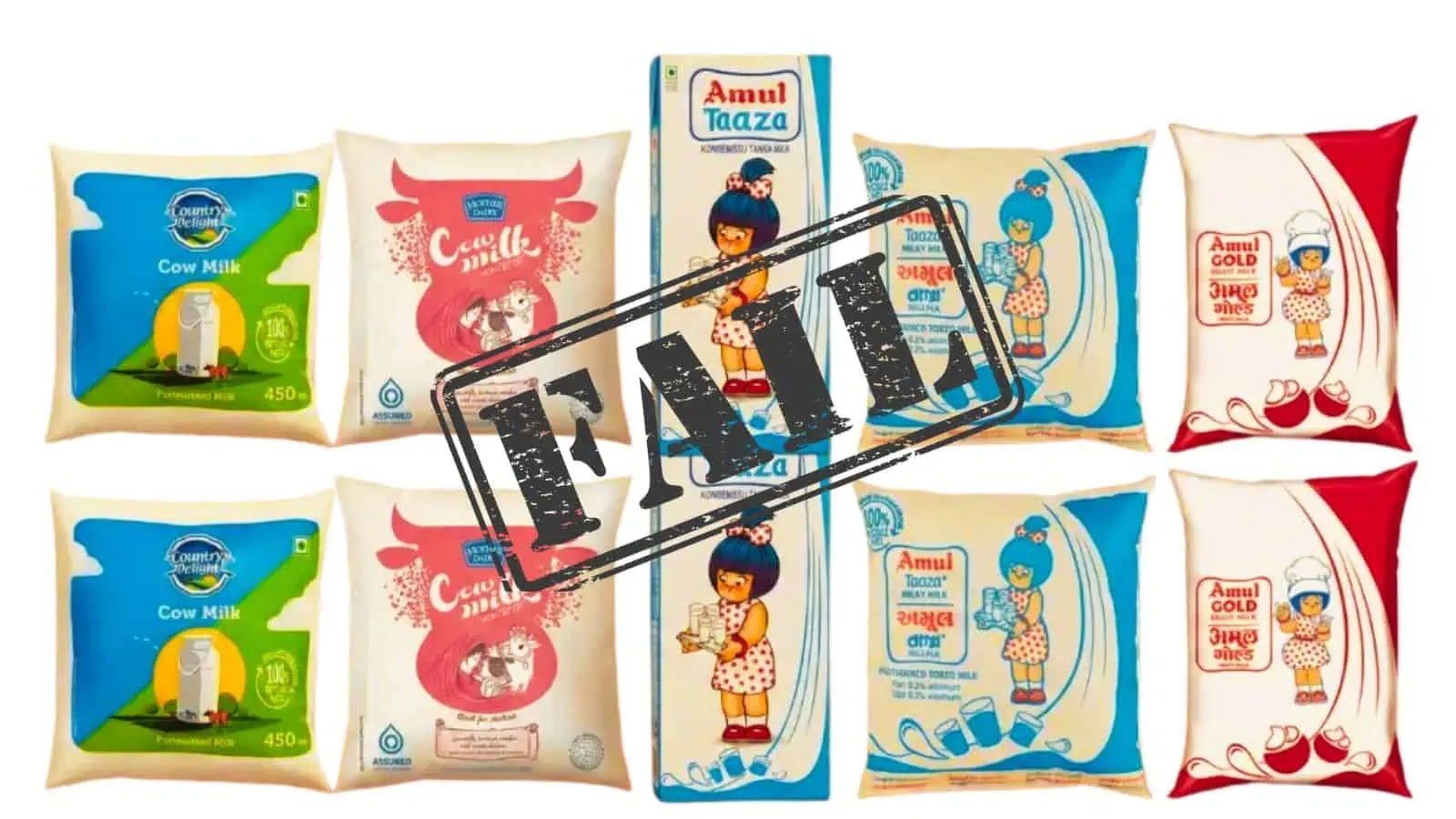
Packed Milk – Coliform Bacteria & Food‑Safety Concerns
1. What the recent tests have shown
A few independent labs that check food safety have taken samples of Amul’s packaged milk and found much more coliform bacteria than the law allows.
| Product that was tested | How many coliform bacteria were found (per millilitre) | What the law says is the maximum |
|---|---|---|
| Amul Taaza (pouch milk) | About 980 CFU ml⁻¹ | 10 CFU ml⁻¹ – the limit set by the Indian food‑safety authority (FSSAI) |
| Amul Gold (pouch milk) | About 25 CFU ml⁻¹ | 10 CFU ml⁻¹ |
| Amul Dahi (Masti) – a yoghurt‑type product | Over 2 100 times the allowed coliform count and a lot of yeast & mould | – |
| Various other Amul pouch milks | Total bacterial count up to 60 000 CFU ml⁻¹ | 30 000 CFU ml⁻¹ (the limit for total bacteria) |
CFU = “colony‑forming units”, a way scientists count how many living bacteria are in a sample.
These numbers have been reported in several newspapers and on social‑media posts that quote the lab’s results. The data come from a single independent testing service, and the results have not yet been officially confirmed by the regulator.
2. What are “coliform bacteria” and why do they matter?
| Point | Simple explanation |
|---|---|
| Where they live | In the intestines of humans and animals, in soil, and in water. |
| Are they dangerous? | By themselves they usually do not cause disease. |
| Why are they used as a warning sign? | Their presence in a processed food (like pasteurised milk) tells us that somewhere in the production chain something went wrong with hygiene – maybe dirty water, equipment, or hands. If coliforms got in, other more harmful germs (like E. coli, Salmonella) could also be there. |
| What does the law say? | The FSSAI allows no more than 10 coliforms per millilitre of fluid milk. Anything above that is considered a safety breach. |
3. How is milk made and where can contamination happen?
- Pasteurisation – Milk is heated (usually 72 °C for 15 seconds) to kill bacteria, including coliforms.
- After pasteurisation – The milk is cooled, poured into bottles or pouches, sealed, and shipped. This step is the most vulnerable. If the filling machines, water used for cleaning, or the workers’ hands are not clean, bacteria can get back into the milk.
- Cold‑chain – Milk must stay refrigerated (≤ 4 °C). If it gets warm, any surviving bacteria can multiply quickly.
If coliforms show up after pasteurisation, the problem is almost always post‑process contamination, not a failure of the heating step.
4. What have the authorities and Amul said?
| Who | What they have said (as of February 2026) |
|---|---|
| FSSAI (Food Safety and Standards Authority of India) | No official notice confirming the lab’s findings. The agency lists the limits but has not announced an investigation into Amul. |
| Amul (Gujarat Cooperative Milk Marketing Federation) | Has disputed the lab results, claiming its own quality checks meet the legal limits and suggesting that sampling or transport errors could explain the high numbers. |
| Consumer‑rights groups (e.g., Trustified) | Keep publishing batch‑wise results and are urging the regulator to act. |
Because the regulator has not yet taken formal action, the issue is still unresolved from a legal point of view.
5. What can you do at home?
| Situation | Easy steps to stay safe |
|---|---|
| You buy Amul pouch milk for everyday use | • Boil the milk before drinking – bring it to a rolling boil and keep it boiling for at least 1 minute. This kills any living coliforms and most other bacteria. • Keep the milk refrigerated (≤ 4 °C) and use it before the “use‑by” date. |
| You belong to a high‑risk group (babies, pregnant women, elderly, people with weak immunity) | • Prefer UHT (ultra‑high‑temperature) milk or freshly boiled milk. • If you have access to a trusted local dairy that shares its testing results, you may feel more comfortable buying from them. |
| You suspect a particular batch is bad | • Write down the batch/lot number printed on the pack. • Call the FSSAI consumer helpline (1800‑11‑2222) or use the FSSAI mobile app to report it. • Keep the product and its packaging – regulators may ask to test it. |
| General kitchen hygiene | • Wash your hands well before handling milk. • Clean and sanitize any containers, bottles, or utensils that touch the milk. • Clean the refrigerator regularly. |
6. Bottom line – should you worry?
- The independent tests have flagged coliform counts up to 98 times higher than allowed in some Amul pouch‑milk batches.
- Coliforms themselves are usually harmless, but their presence tells us that sanitary practices may have slipped, raising the chance that other, more dangerous germs could be present.
- No official confirmation or enforcement action has been announced yet, and Amul says the results are not reliable.
- The safest thing you can do right now is to boil the milk before drinking (especially if you are in a vulnerable group) and to keep it cold until you use it.
Until the regulator makes a final decision, a simple boil‑and‑store routine is the most effective way for a common person to protect his or her health.
Sources (checked up to 11 February 2026)
- Trustified lab‑testing reports – covered by India Herald, Economic Times, Siasat, and social‑media posts.
- FSSAI website – limits for coliforms (≤ 10 CFU ml⁻¹) and total plate count (≤ 30 000 CFU ml⁻¹) in fluid milk.
- Amul corporate statements – press releases and media interviews responding to the reports.
- Basic microbiology textbooks – description of coliform bacteria and why they are used as hygiene indicators.
All information reflects publicly available data up to the date of this answer.