
INTERNATIONAL
Bangladesh President Sparks Dramatic New Governance Era
Bangladesh’s President in the Spotlight: From Inter‑governmental Tensions to a New Era of Governance
🔑 Key Highlights
- President Shahabuddin accuses former interim leader Muhammad Yunus of constitutional breaches.
- The President administered the oath to new Prime Minister Tarique Rahman, underscating his ceremonial role.
- Allegations include removal of presidential portraits from Bangladeshi missions worldwide.
- Potential parliamentary inquiries into the U.S.–Bangladesh trade pact signed during the interim period.
- International heads of state attended the swearing‑in, signaling regional confidence.
In the wake of Bangladesh’s turbulent 2024‑2026 political cycle, President Mohammed Shahabuddin has re‑emerged as a central figure in the nation’s constitutional drama. Recent statements accuse former interim‑government head Muhammad Yunus of sidelining the presidency, while the President also performed his ceremonial duty by swearing in the newly elected Prime Minister Tarique Rahman after the BNP’s landslide victory. These developments signal a re‑assertion of presidential relevance, renewed scrutiny of policy decisions made during the interim period, and a cautious return to political stability.
Recent Headlines Involving the President
| Date (2026) | Source | Headline / Key Point |
|---|---|---|
| 23 Feb | The Hindu | President Shahabuddin says Yunus “did not follow the constitution” and kept the President out of major decisions, notably a trade agreement with the United States. |
| 23 Feb | Times of India | Shahabuddin describes the Yunus era as a “storm” he survived, reiterating that he was kept “in the dark.” |
| 23 Feb | The Tribune | Allegations that Yunus tried to oust the President and removed presidential portraits from Bangladeshi diplomatic missions worldwide. |
| 17 Feb | Los Angeles Times | President Shahabuddin administered the oath of office to new Prime Minister Tarique Rahman and the cabinet, marking a smooth transition after the February elections. |
| 23 Feb | Facebook/WION | Re‑states Shahabuddin’s accusations against Yunus while noting his ceremonial role in the inauguration. |
The Political Context
1. August 2024 Uprising – Mass protests and a military‑backed movement forced the resignation of long‑time Prime Minister Sheikh Hasina, creating a power vacuum.
2. Interim Government (2024‑2026) – Led by former economist‑politician Muhammad Yunus, the caretaker administration oversaw the country for 18 months, issuing several policy decisions, including a U.S.–Bangladesh trade pact that was announced without presidential briefings.
3. February 2026 Elections – The Bangladesh Nationalist Party (BNP), under Tarique Rahman, secured a decisive parliamentary majority, ending the interim period.
Why the President’s Accusations Matter
⚡ Key Issues & Potential Impact
- Constitutional Breach – Yunus “did not follow the constitution” and excluded the President from key decisions.
Impact: May trigger parliamentary inquiries into the legality of the interim government’s actions, especially the trade agreement. - Removal of Portraits – Presidential images were taken down from embassies and consulates worldwide.
Impact: Symbolic undermining of the head‑of‑state’s authority, potentially prompting diplomatic protests or a restoration campaign. - Attempted Ouster – Yunus allegedly tried to remove Shahabuddin from office.
Impact: Raises concerns about political overreach and could influence future checks on executive power.
The Swearing‑In Ceremony: A Symbol of Normalcy
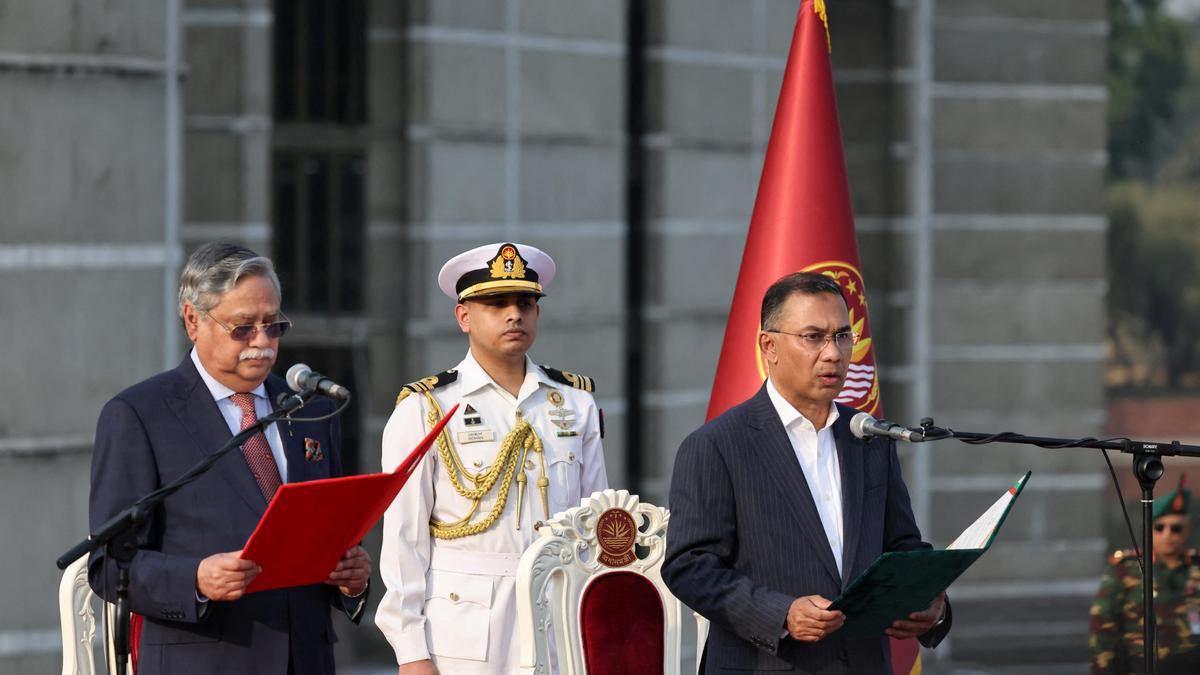
Date: 17 February 2026 Location: Bangabhaban (Presidential Palace) Key Participants: President Mohammed Shahabuddin, Prime Minister‑elect Tarique Rahman, regional leaders (e.g., Maldives President Mohamed Muizzu, Bhutan’s Prime Minister).
The ceremony, broadcast live on national television, was marked by:
- Presidential Oath Administration: Shahabuddin formally swore in the new Prime Minister, underscoring his constitutional role despite recent tensions.
- International Attendance: The presence of neighboring heads of state signaled regional confidence in Bangladesh’s return to democratic governance.
- Public Reception: Crowds in Dhaka celebrated the event, viewing it as a return to stability after two years of uncertainty.
“The constitution is the backbone of our nation; any deviation must be examined and corrected.”
— President Mohammed Shahabuddin
Implications for Bangladesh’s Future
1. Re‑asserted Presidential Influence – Shahabuddin’s vocal stance could lead to a more active presidency, especially in foreign‑policy and constitutional oversight.
2. Policy Scrutiny – The U.S. trade deal signed during the interim period may face parliamentary review, potentially altering its terms or implementation timeline.
3. Political Stability – The orderly handover of power suggests Bangladesh is moving past the crisis, though underlying tensions between the President and former interim leaders could resurface if not addressed.
4. International Relations – By highlighting procedural breaches, the President may seek greater diplomatic engagement to reassure foreign partners about Bangladesh’s adherence to rule‑of‑law norms.
Conclusion
President Mohammed Shahabuddin has transitioned from a largely ceremonial figure to a prominent constitutional watchdog. His public criticism of the former interim government, combined with his ceremonial duties in the inauguration of Prime Minister Tarique Rahman, illustrates a dual narrative: a struggle for institutional respect and a hopeful step toward democratic normalization. As Bangladesh navigates the aftermath of a historic political upheaval, the President’s actions will likely shape the nation’s governance, legal framework, and international standing for years to come.