
INTERNATIONAL
Sky Under Siege: UAE Partially Resumes Flights as 2026 Iran Crisis Disrupts Global Transit
Sky Under Siege: UAE Partially Resumes Flights as 2026 Iran Crisis Disrupts Global Transit
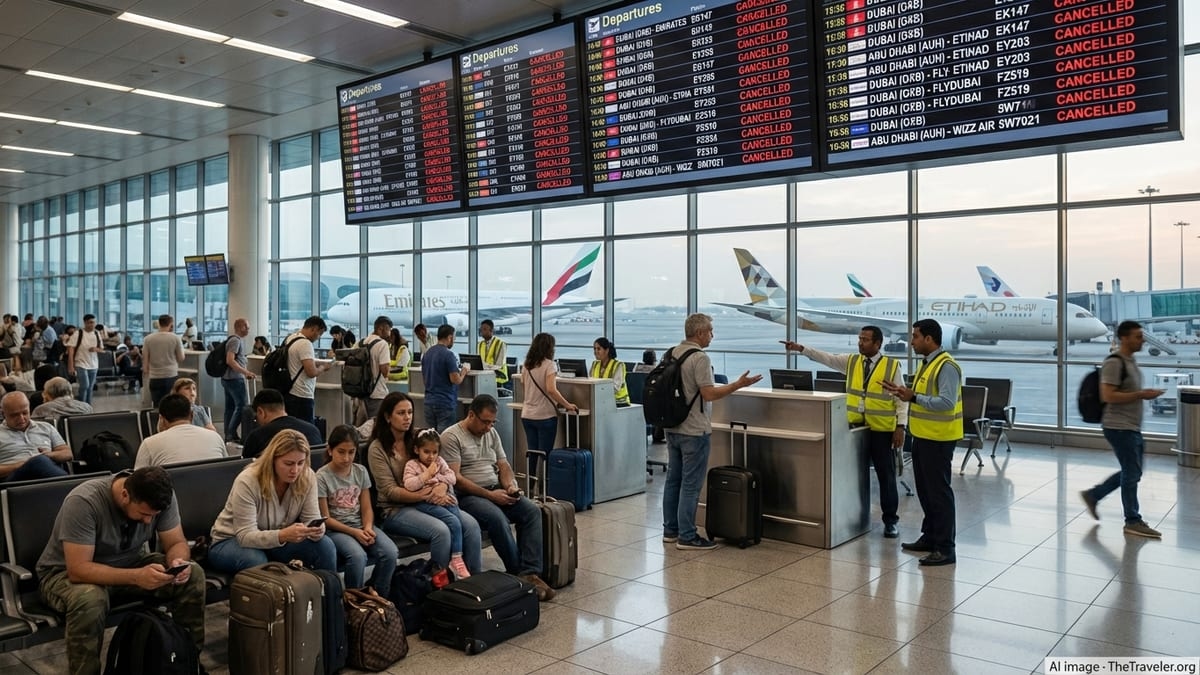
In a fragile attempt to restore international connectivity, the United Arab Emirates has begun allowing limited flight operations from Dubai and Abu Dhabi. However, as Iranian missile strikes continue to target regional infrastructure, the shadow of a total aviation blackout looms large over the Gulf.
Key Takeaway: While Zayed International Airport (AUH) and Dubai International (DXB) have partially resumed services on March 2, 2026, the volume remains significantly below capacity. Disruption continues as airlines navigate the "acute risks" of active war zones and the heightened **Middle East radiation risk** reported near nuclear facilities.
The aviation landscape of the Middle East is currently a patchwork of emergency protocols and restricted corridors. Following a weekend of intense military activity, UAE authorities have authorized the departure of limited flights. This cautious reopening comes as the Pentagon implements the "Hegseth Doctrine" to finish the conflict, leaving the civilian skies of the Gulf in a state of high-stakes uncertainty.
The reopening of these hubs is critical not just for travelers, but for the stability of India-Iran relations and broader Indo-Pacific trade. With millions of Indian expatriates relying on the Dubai-Abu Dhabi corridor, any sustained closure threatens to create a humanitarian and logistical bottleneck of unprecedented scale.
The Partial Resumption: Abu Dhabi and Dubai Update
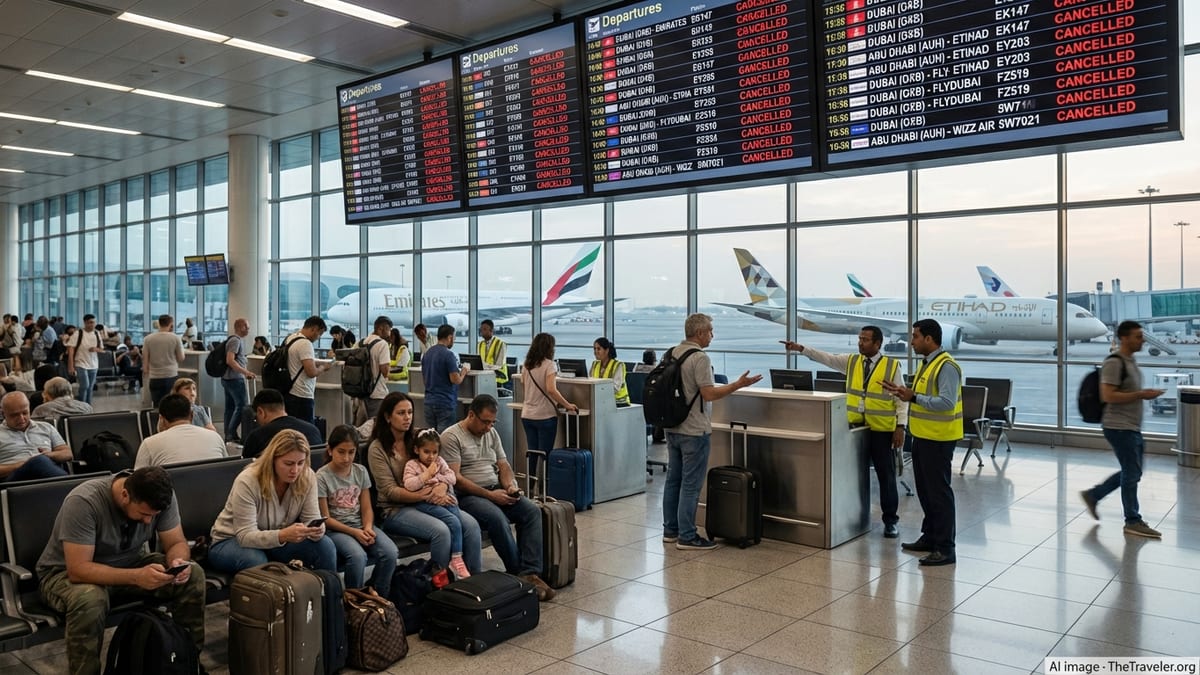
According to the Khaleej Times, Zayed International Airport (AUH) began processing a limited number of outbound flights on Monday morning. However, passengers are being urged to check their flight status repeatedly, as the situation remains fluid. Similarly, NDTV reports that Dubai International (DXB)—the world's busiest hub for international travel—has allowed a trickle of flights to depart, primarily toward safe corridors in the West and South Asia.
The BBC notes that while some planes are in the air, the "disruption continues" for thousands of stranded passengers. The primary concern for carriers is the proximity of flight paths to Iran nuclear sites and the potential for a missile miscalculation, a risk underscored by the recent downing of Iranian Su-24 jets by Qatari forces.
Aviation Safety and the Radiation Risk
The flight restrictions are not merely about avoiding physical projectiles. The IAEA Natanz report 2026 has heightened concerns regarding the Middle East radiation risk. Should a strike lead to a radiological release, international aviation regulators (ICAO) would likely mandate the immediate closure of all UAE airspace, as the prevailing winds could carry contaminants across the Gulf's most vital flight paths.
This environmental threat is a silent variable in the Khamenei succession crisis. As various Iranian factions vie for control, the risk of "scorched earth" military decisions increases, leaving UAE civil aviation authorities with the impossible task of guaranteeing safety in a theater where the rules of engagement are being rewritten hourly.
Synthesis: A Hub in Transition
The UAE’s attempt to reopen its skies is a testament to the country's resilience, but it also highlights the extreme vulnerability of global hubs in the age of asymmetric warfare. As the Dow continues to fluctuate and oil prices remain spiked, the resumption of flights is seen as a vital economic lifeline for a region on the brink.
For now, the message from the UAE is one of "calculated normalcy." Yet, as long as the 2026 Iranian crisis continues to produce "acute risks" and military surprises, the status of Dubai and Abu Dhabi as the world’s crossroads remains under serious threat. Passengers are advised that while the doors are open, the sky is far from clear.